
#occupyEarth
Glass and Digital Media Performance Sculpture
Documentation
Gallery
This piece will be in a San Jose State University art gallery during the begining of Spring 2012. Feel free to browse our photo gallery. Read More
Our Team
Thanks to the team who went above and beyond to finish the project: Esteban Salazar, Scott Blackwell, Christopher Unger, Steven Cline.
Fabrication
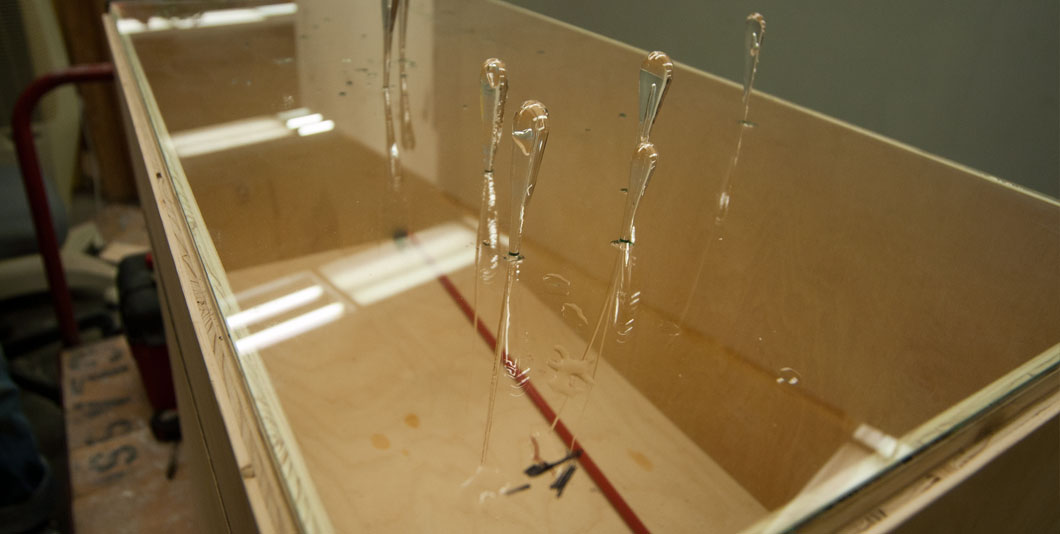
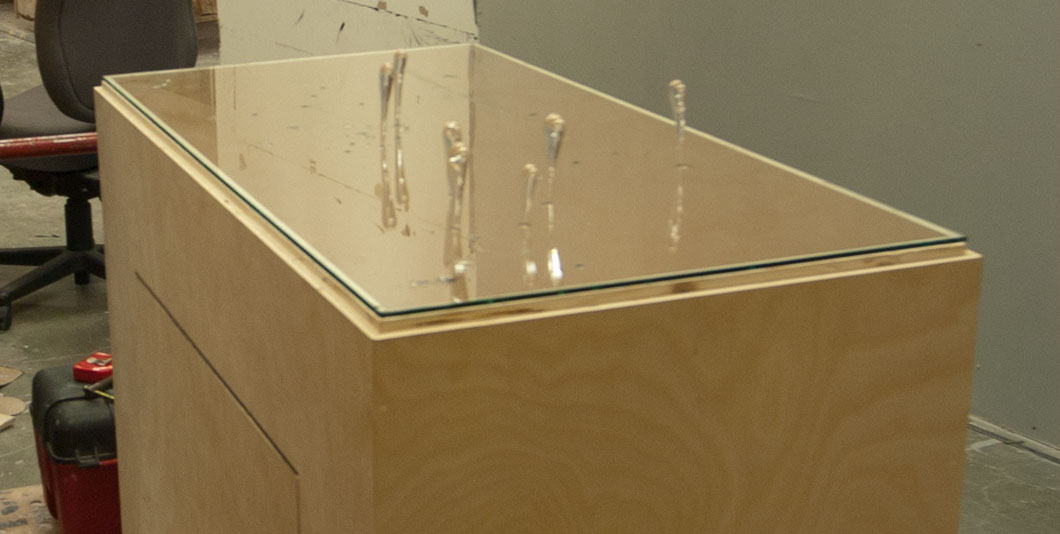
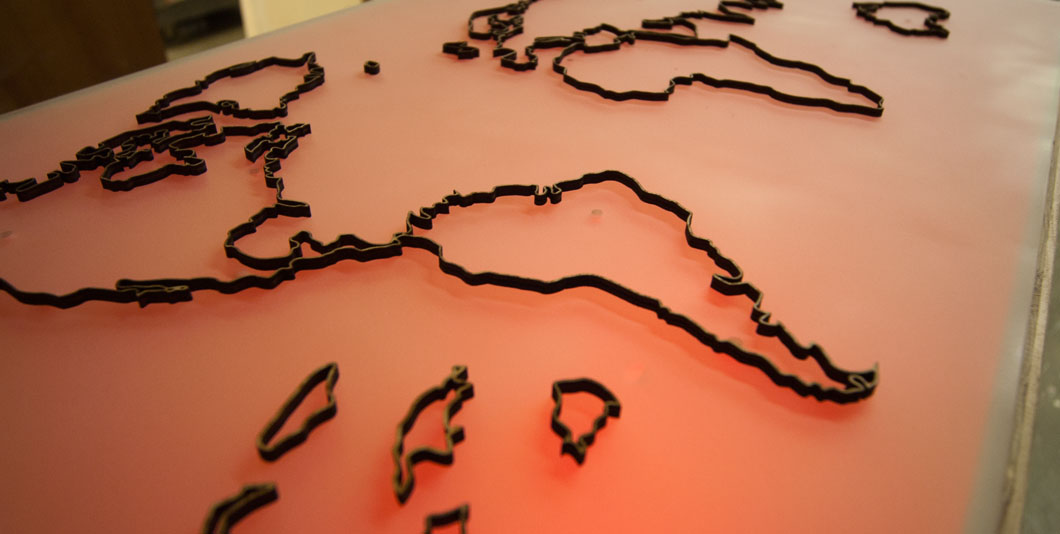
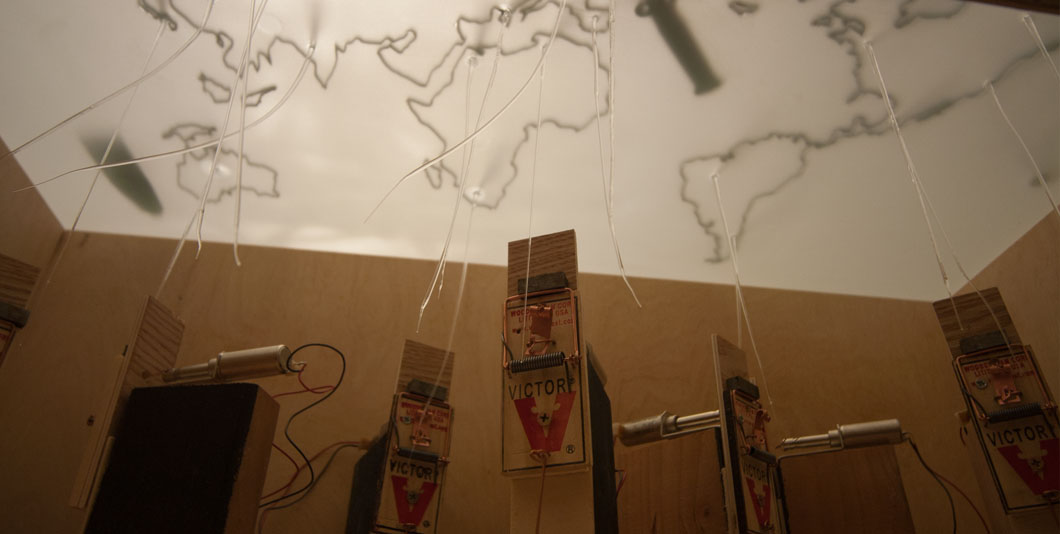
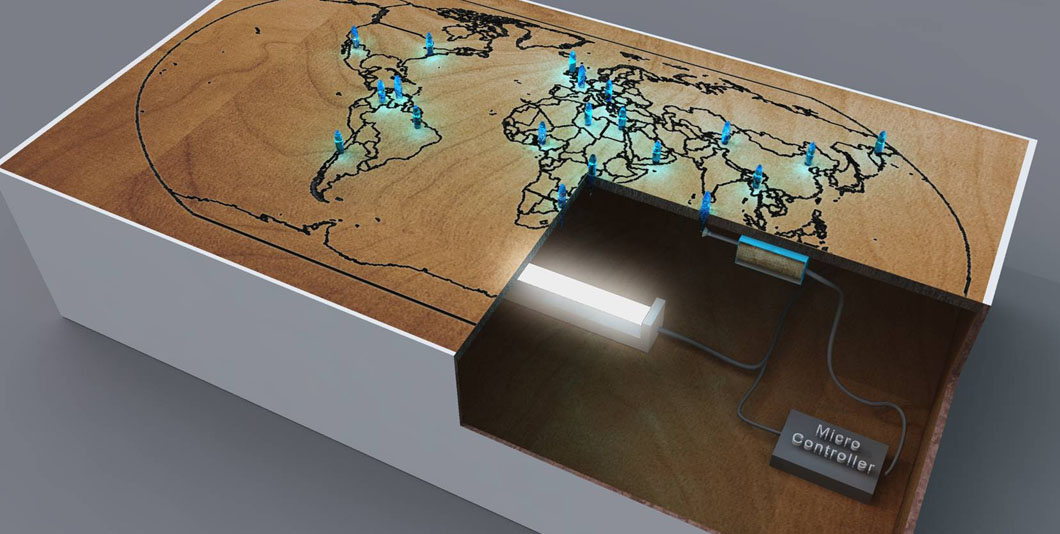
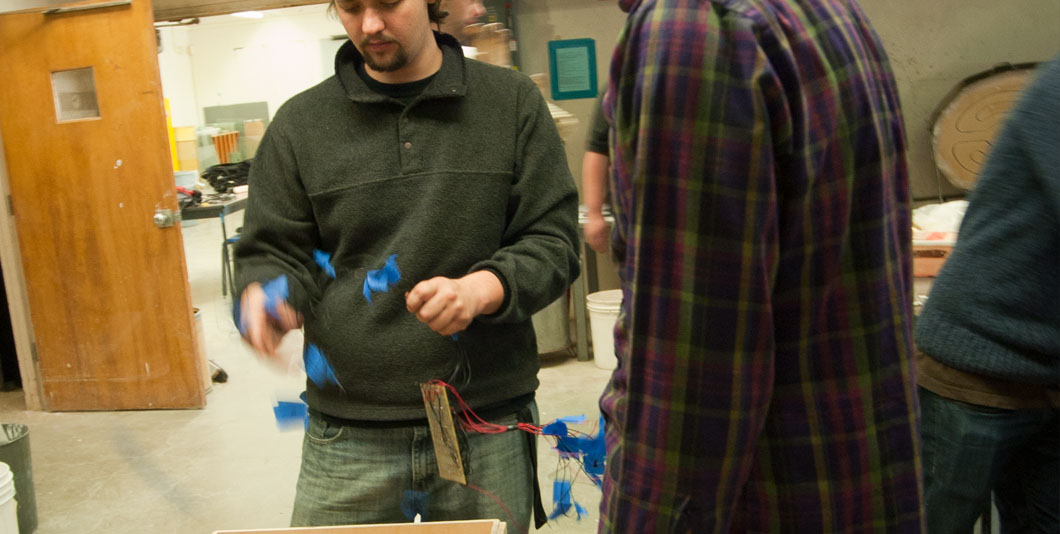
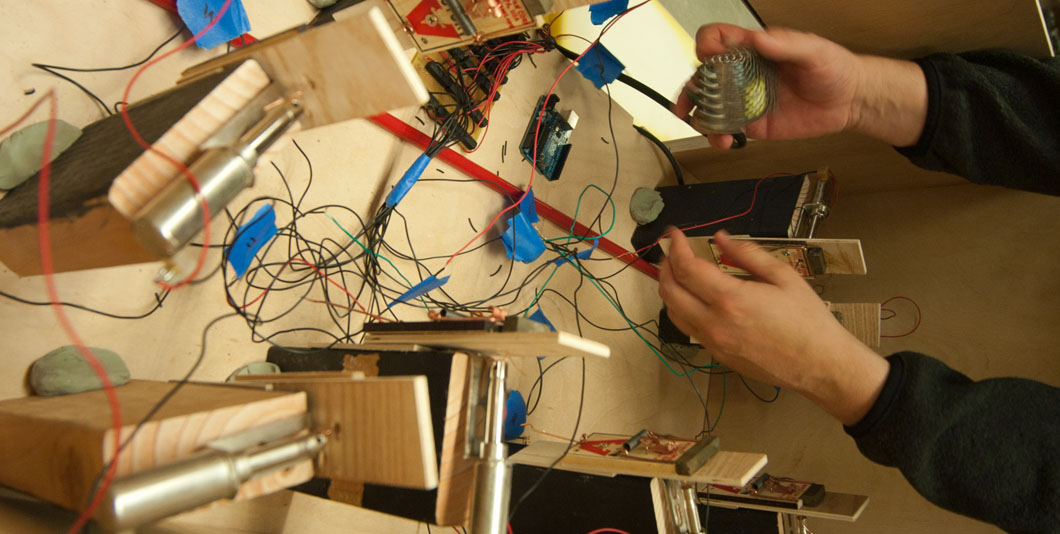
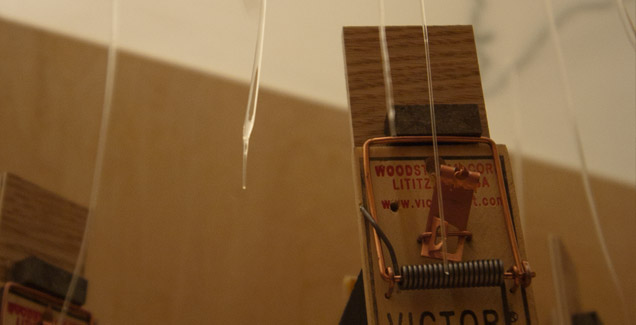
The project was mainly composed of glass, wood, mousetraps, solenoids and a microcontroller. Our gallery has drafts as well as documentation of building the project itself. Read More

Artist Statement
The past few years have been trying on many communities throughout the world. The global recession has brought to light a host of social problems that are not easily solved, problems that had been continually swept under the rug in favor of keeping up a façade of community across all the nations. Oppressive governments, false democracies, and economic injustice have been applying a constant stress to their people.
This is the dawn of #OccupyEarth.
This new global revolution has only been made possible in the past few years. Social media networks working from the internet have allowed communication and coordination across countries, instantaneously. These new movements cannot be killed, because they are headless. The few identifiable “leaders” of these protests are as toothless as they are unnecessary. There is no Martin Luther King here, no Cesar Chavez. Decisions about the movement are made by the collective movement itself, which means that once it explodes into action, it is impossible to stop, and the pieces will never again be forced back into the whole from whence they came. For better or worse, after this decade the world will never be the same.
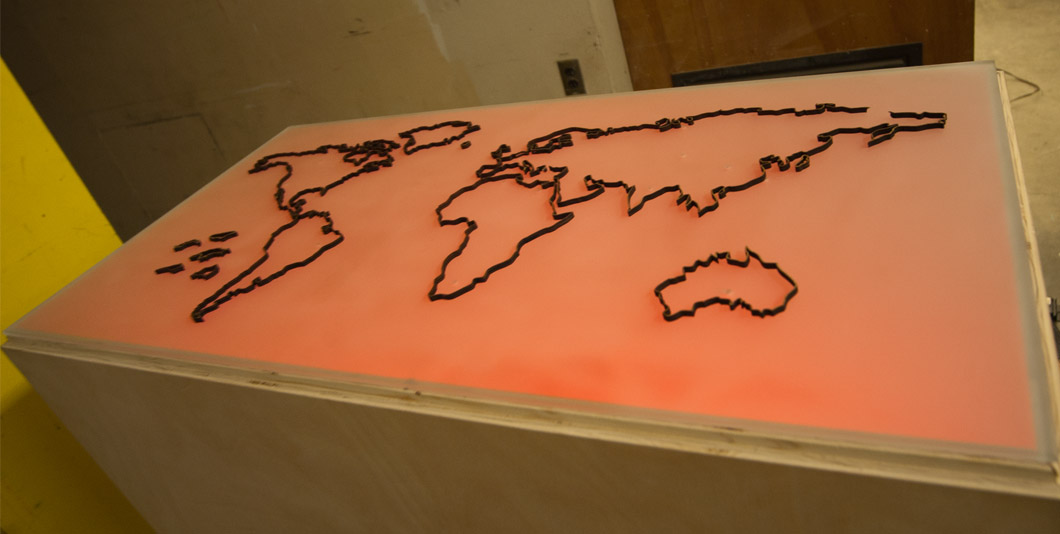
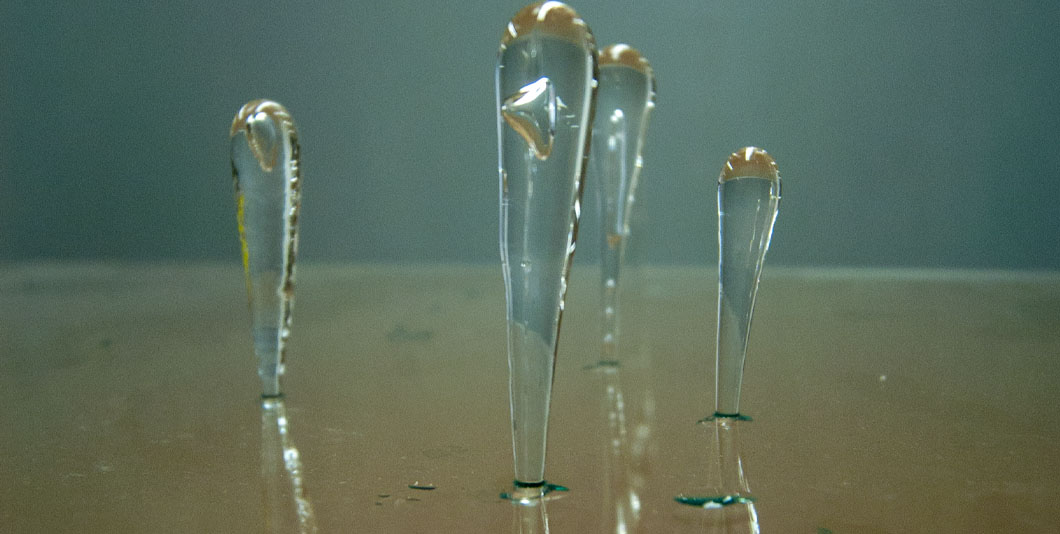
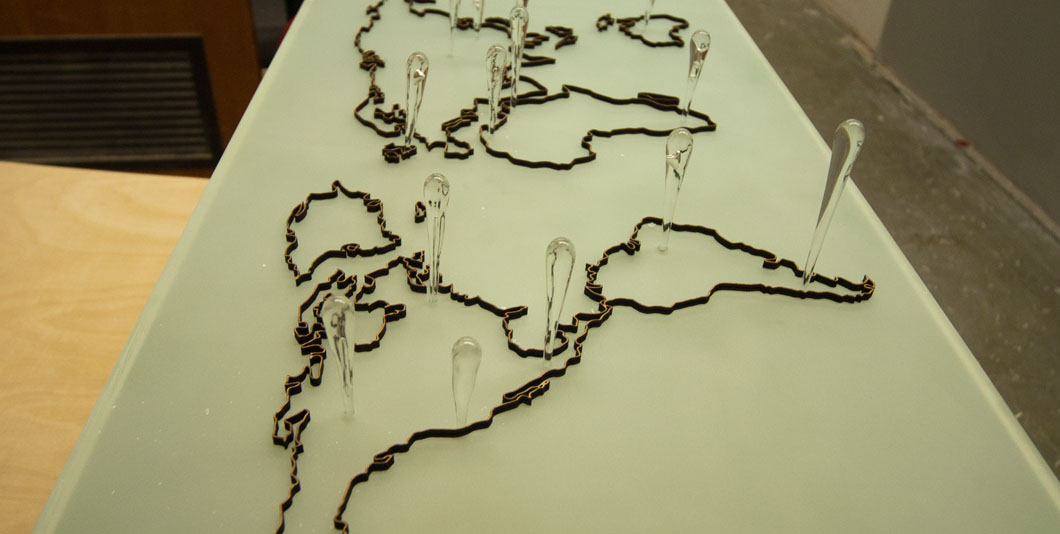
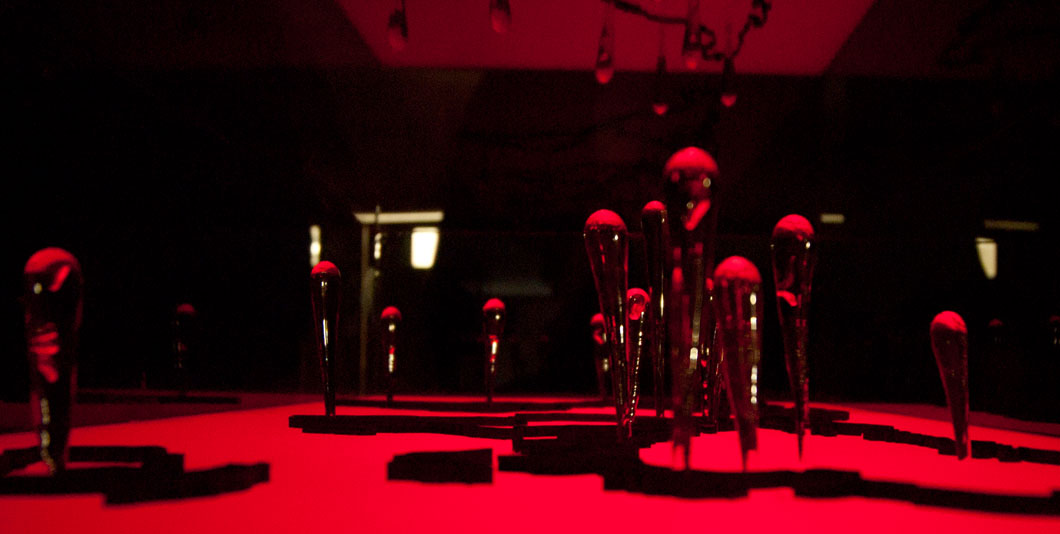
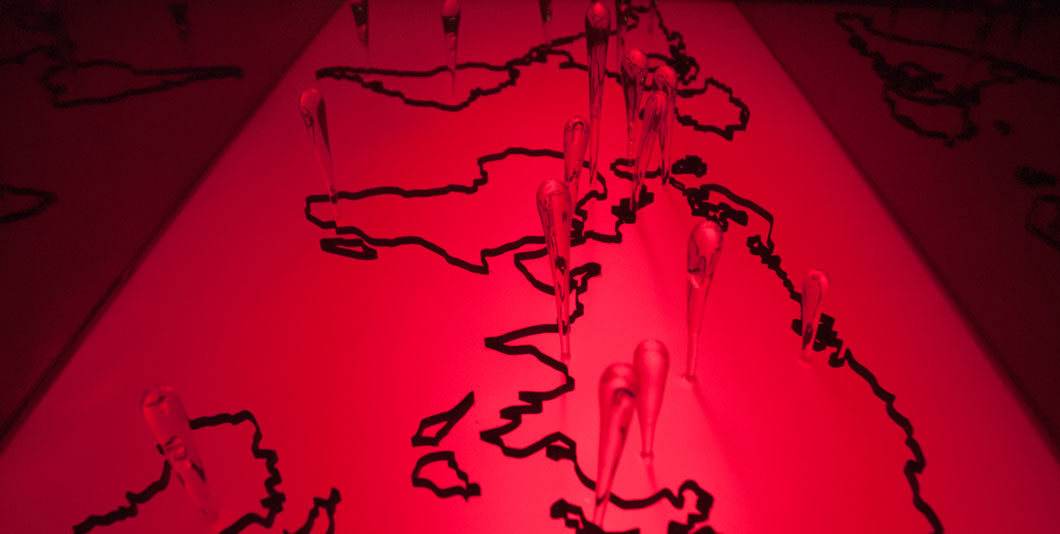
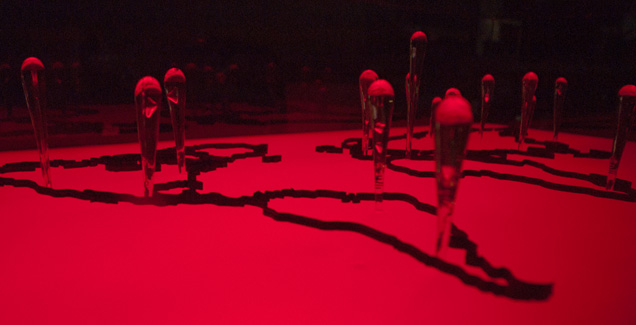
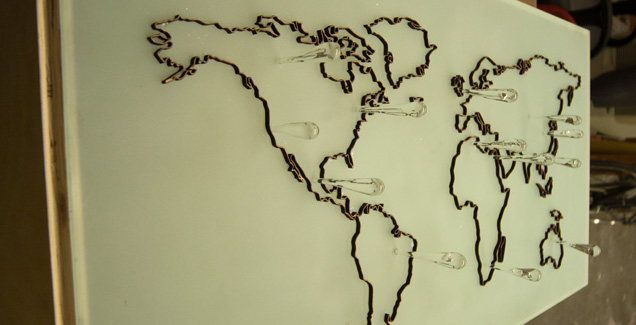
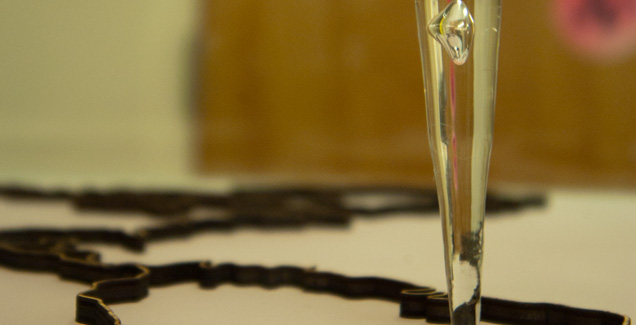
It was with these thoughts in mind that we created this collaborative project. In glass, we found the perfect metaphor to illustrate these movements: The Prince Rupert’s Drop, a small teardrop of glass which is under so much pressure that, when its tail is broken, it explodes into fine particles of glass dust, expanding outward at speeds nearing five times the speed of sound. The digital media portion of our team provided our trigger, a solenoid and mousetrap setup, to detonate the drops.
Nations depicted (Chronological Order): Greece, Tunisia, Egypt, Spain, England, USA (New York), USA (Oakland), Japan, China, Australia, Mongolia, India, Russia, South Africa, France, Brazil, Chile, Mexico, Canada
Materials used: Glass, Solenoids, Moustraps, Wood
— Esteban Salazar, Scott Blackwell, Christopher Unger, Steven Cline
Gallery


About the Project
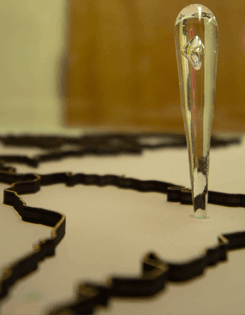
Our group was tasked to complete a glass and digital media project during our Fall 2011 semester. The piece had to combine both disciplines of glass working and digital media. We knew from the beginning that we would be working with Rupert's drops because of their unique properties. After some brainstorming and some drafts, we found the core design that we wanted to work with.
Our team consisted of two students from each of our classes. Steven and Esteban from the glass department and Scott and Chris from digital media. This is how our project work ended up breaking down between teammates:
- Esteban: Glasswork, Ruperts Drops, Solenoid Fabrication
- Chris: Box Construction, Solenoid Mechanism Fabrication
- Steven: Formal Artist Statement, Background Research, Drops
- Scott: Microcontroller Programming, Relay Circuit, Solenoid Mechanism Fabrication
Contact Info
- Esteban Salazar
- Scott Blackwell
- Chris Unger
- Steven Cline
#OccupyEarth portfolio website by Scott Blackwell of imagescubed.com